Printable Bloom's Taxonomy
Printable Bloom's Taxonomy - The theory is based upon the idea that there are levels of observable actions that indicate something is happening in the brain (cognitive activity.) by creating learning objectives using. Web the below overview shows the progression of bloom’s taxonomy, how each thinking skill applies in practice, and examples of activities using digital tools.” view full size image. The framework elaborated by bloom and his collaborators consisted of six major categories: Within each domain, learning can take place at a number of levels ranging from simple to complex. Web in brief, bloom’s taxonomy is a series of cognitive skills and learning objectives arranged in a hierarchical model. Web bloom’s taxonomy verbs this table of verbs lists cognitive processes that fit into bloom’s six categories and help identify the cognitive complexity or the order of thinking. Web what is bloom’s taxonomy? Web benjamin bloom created a taxonomy of measurable verbs to help us describe and classify observable knowledge, skills, attitudes, behaviors and abilities. This assists instructors when creating lesson and course objectives. Bloom’s taxonomy attempts to classify learning stages from remembering facts to creating new ideas based on the acquired knowledge.

Bloom's Taxonomy Explained in Plain English Blooms taxonomy, Critical

Bloom's Taxonomy Education Table
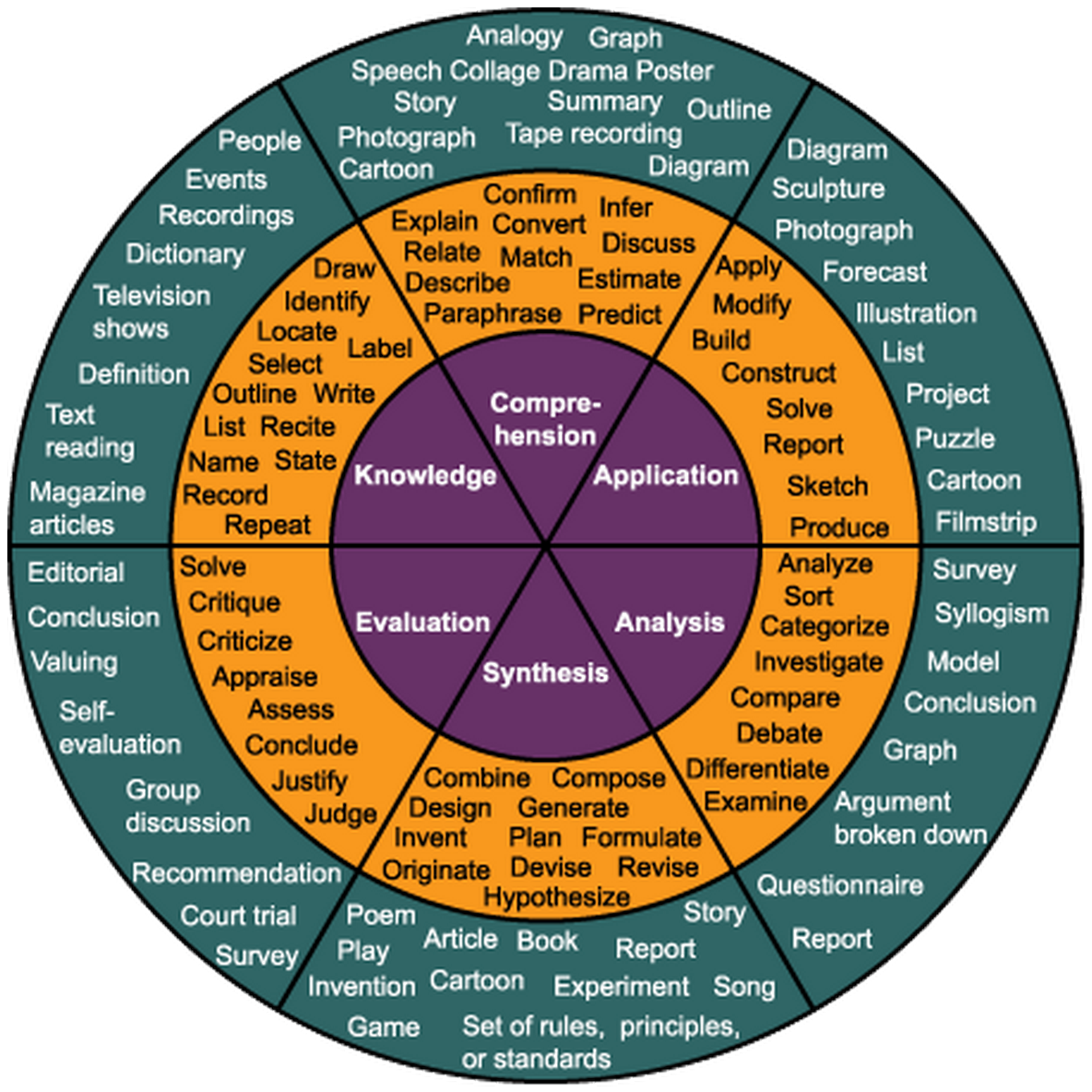
8 Wonderful Blooms Taxonomy Posters for Teachers Educational

Bloom's Taxonomy Verbs Free Classroom Chart
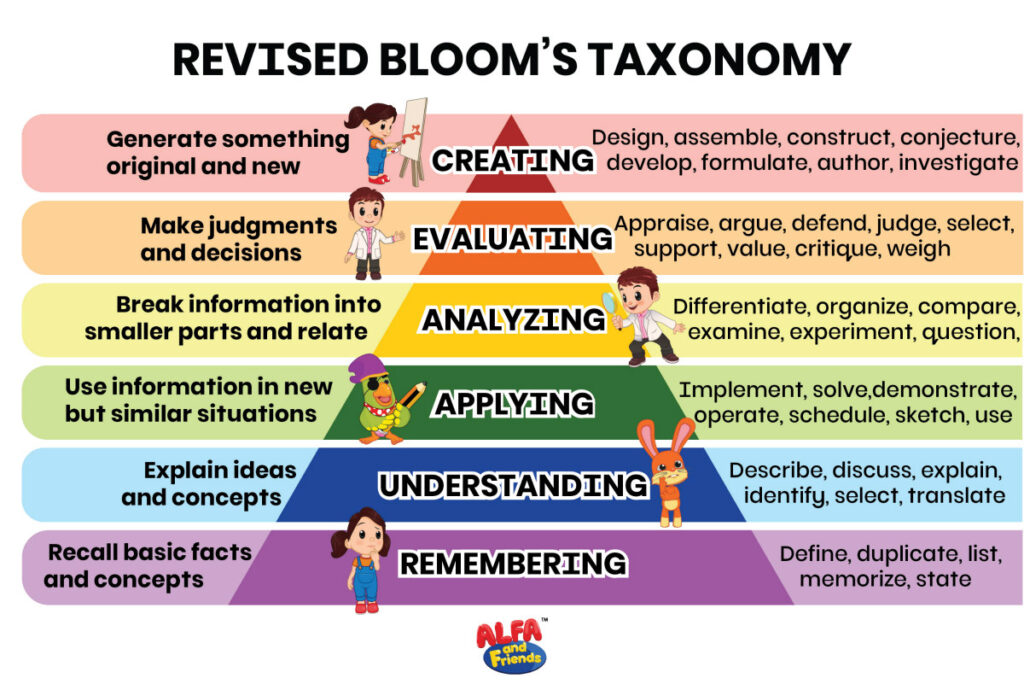
Using Bloom’s Taxonomy to Guide Interactions in the Classroom ALFA
:max_bytes(150000):strip_icc()/5857112597_eae735e2af_o-58ac97533df78c345b72a141.jpg)
How to Construct a Bloom's Taxonomy Assessment

FREE Blooms Taxonomy printable flipchart not an iLesson but very
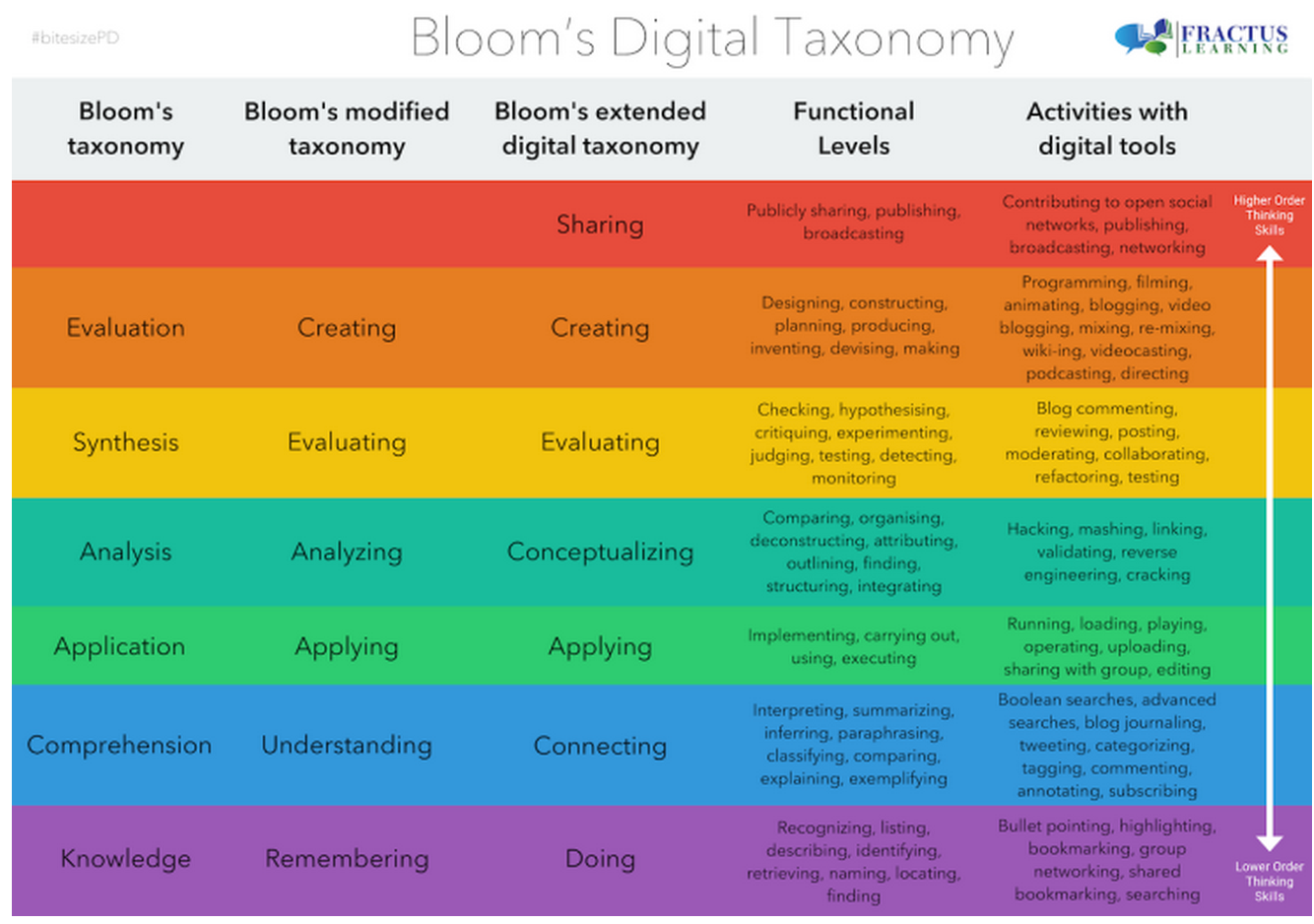
New Bloom's Taxonomy Poster for Teachers Educators Technology
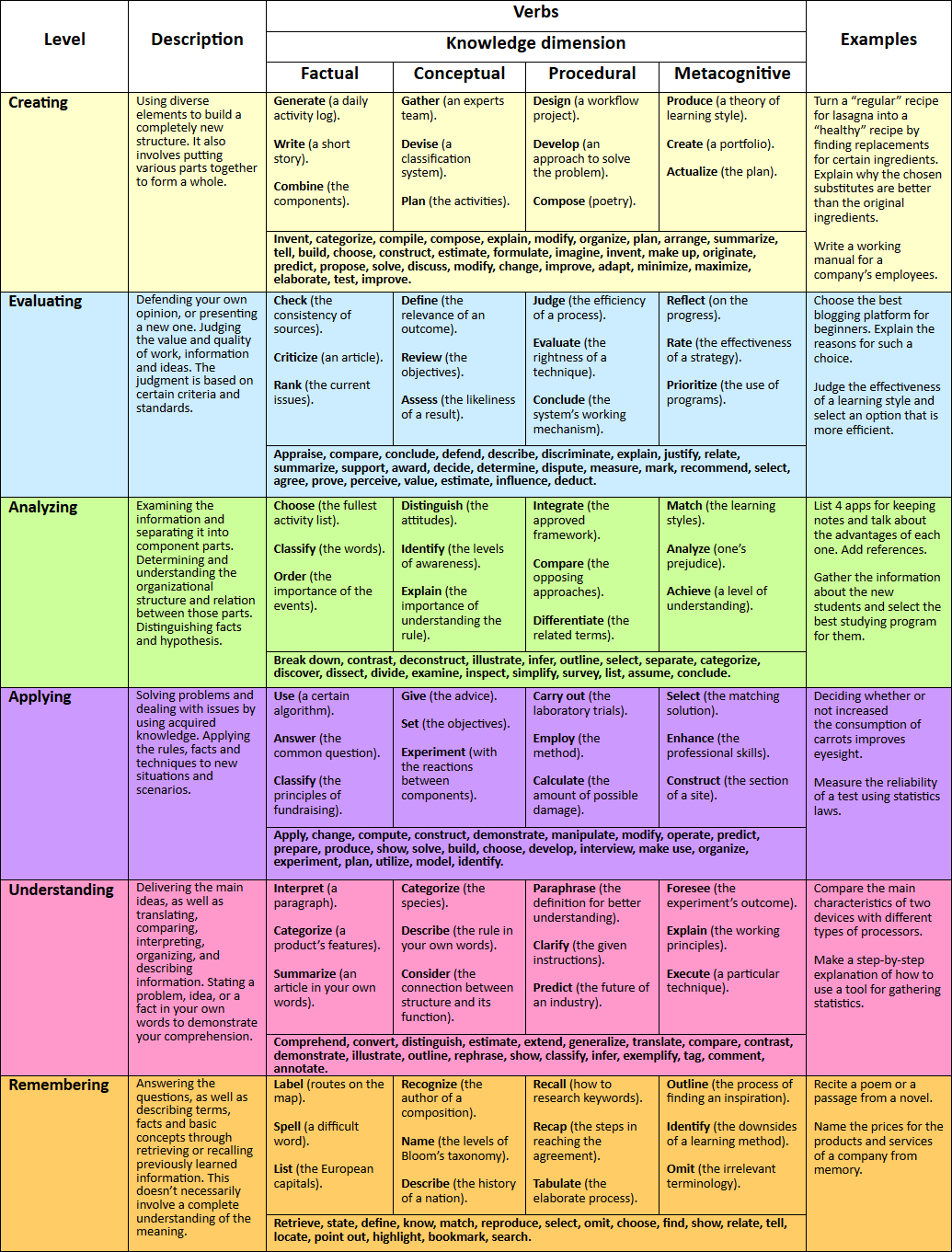
Bloom's Taxonomy—How to Make Your Studying Perfect?

The Bloom's Taxonomy Verbs Poster for Teachers verb poster The Bloom's
Creating Bloom’s Definition Understanding Of Exhibit Memory Of Previously Learned Material By Recalling Facts, Terms, Basic Concepts, And Answers.
Bloom’s taxonomy attempts to classify learning stages from remembering facts to creating new ideas based on the acquired knowledge. Before applying a concept in real life, we must understand it. Web bloom’s taxonomy comprises three learning domains: Web revised bloom’s taxonomy action verbs.
Web Benjamin Bloom Created A Taxonomy Of Measurable Verbs To Help Us Describe And Classify Observable Knowledge, Skills, Attitudes, Behaviors And Abilities.
A taxonomy for learning, teaching, and assessing benjamin bloom and colleagues (1956) created the original taxonomy of the cognitive domain for categorizing level of abstraction of questions that. Discuss a new concept you can attempt to implement in future based on what you. Within each domain, learning can take place at a number of levels ranging from simple to complex. The following is a list of measurable action verbs that can be used when you are creating your learning objectives.
Learn To Connect The Course Content;
The framework elaborated by bloom and his collaborators consisted of six major categories: Understand and implement bloom’s taxonomy in the classroom; The theory is based upon the idea that there are levels of observable actions that indicate something is happening in the brain (cognitive activity.) by creating learning objectives Web posted by jessica shabatura | sep 18, 2014 | syllabus & course creation bloom’s taxonomy provides a list of action verbs based on each level of understanding.
Development Of The Taxonomy Benjamin Bloom Was An Educational Psychologist And The Chair Of The Committee Of Educators At The University Of.
Demonstrating basic understanding of facts and ideas. Web in 1956, benjamin bloom with collaborators max englehart, edward furst, walter hill, and david krathwohl published a framework for categorizing educational goals: Web what is bloom’s taxonomy? Web anderson,$l.$w.,$&$krathwohl,$d.$r.$(eds.).$(2001).$ataxonomy$for$learning,$teaching$andassessing:$arevisionof$bloom's$taxonomyof$educational$ outcomes:$complete$edition,$new$york$:longman.$ anderson&$krathwohl,$2001$ anderson&$krathwohl,$2001$ $ $