Glasgow Coma Scale Printable
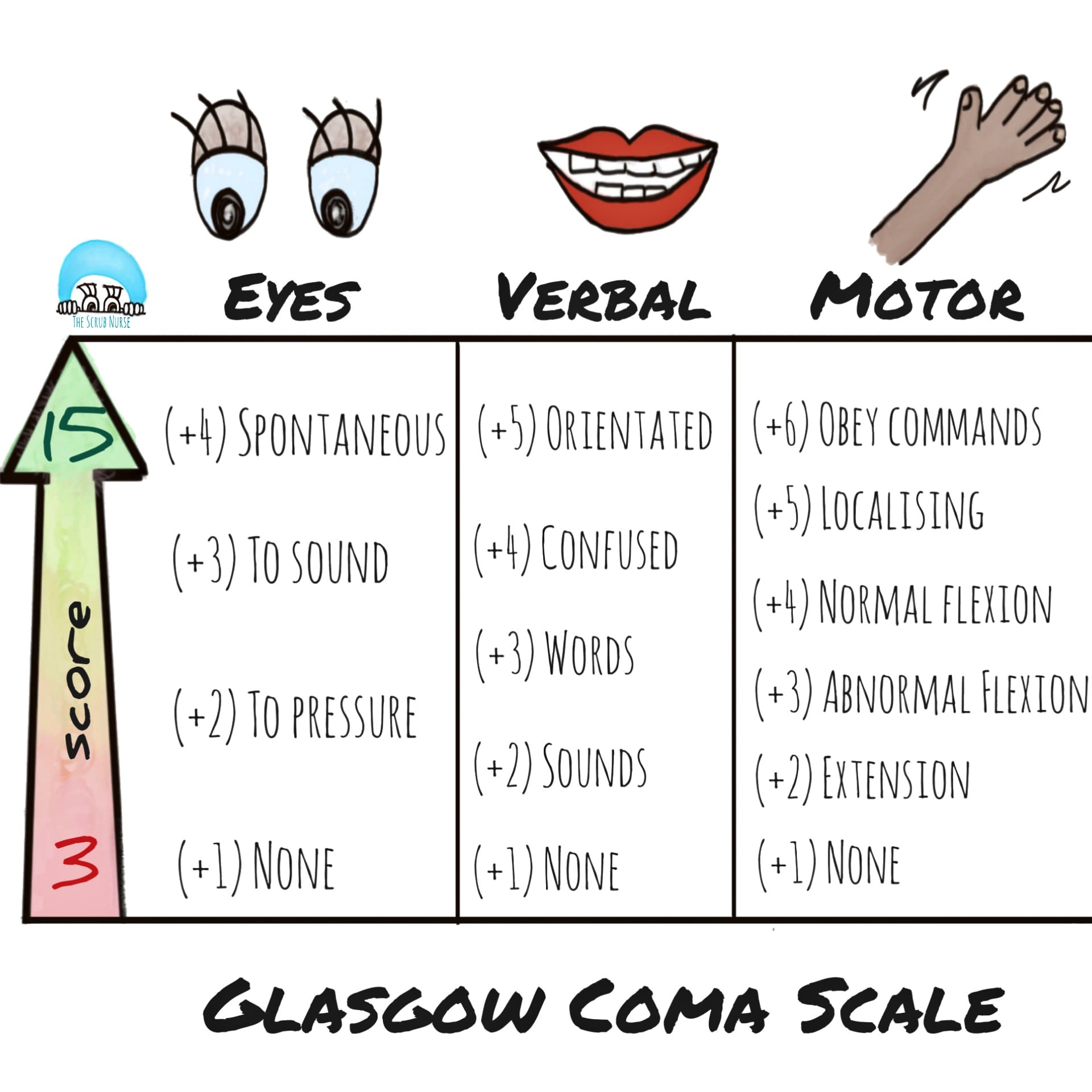
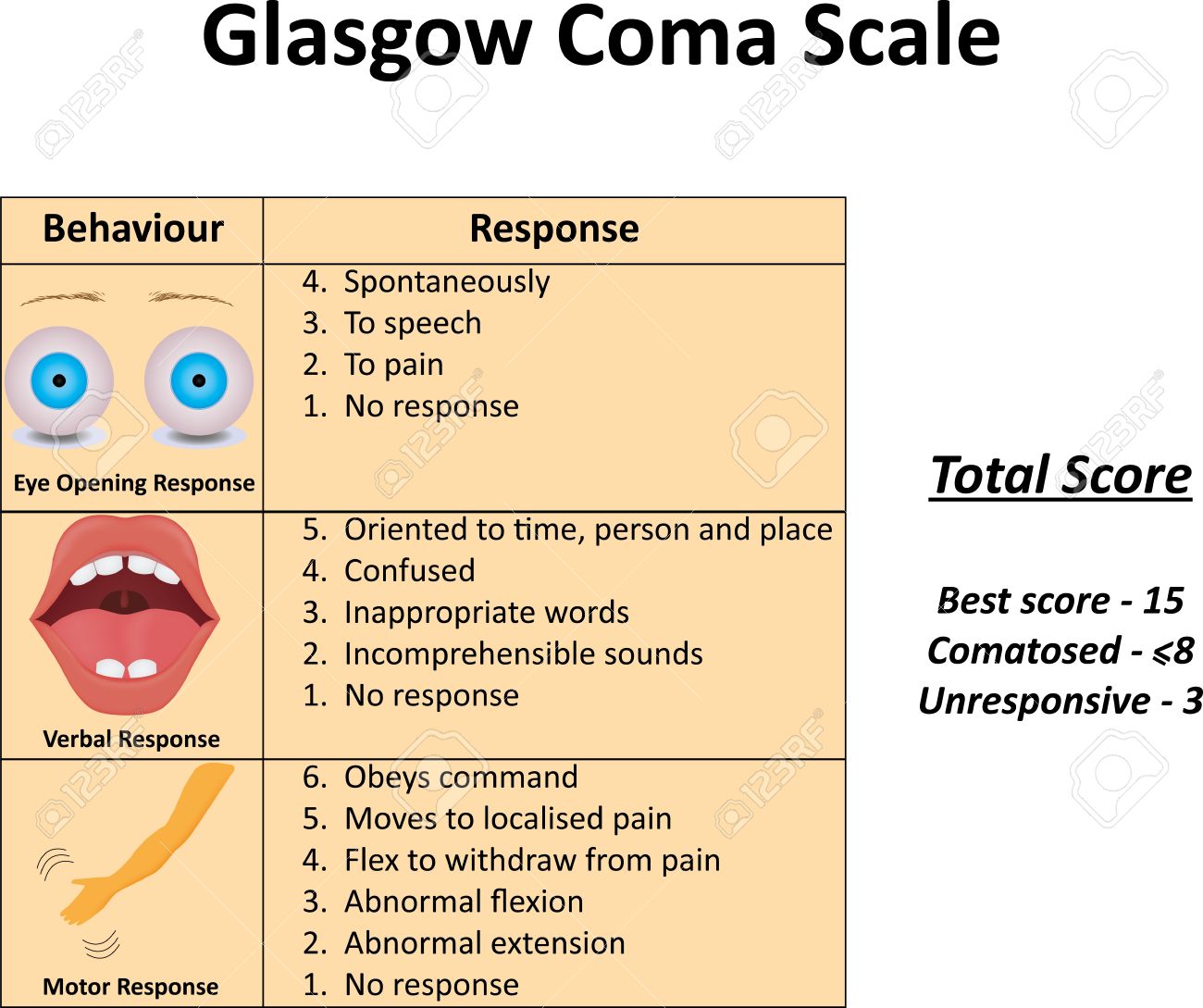
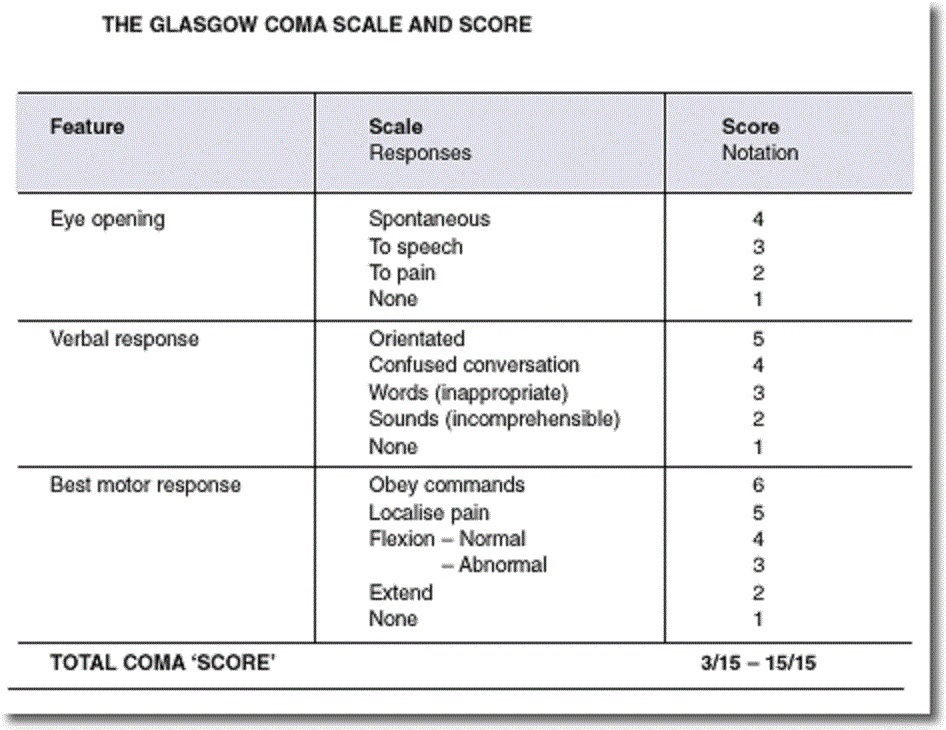
Glasgow Coma Scale Printable - The graphs present probabilities of outcome of an adult with traumatic brain injury. It is numerical rating system, originally used for measuring conscious state following traumatic brain injury, which has become a widely used and. Prognostic significance in trauma only. Web it is preferred that the glasgow coma scale (score) or gcs be given in sequence by category, for example: It was developed more than 40 years ago by two neurosurgeons in glasgow and is widely applied today.1 the gcs uses a triple criteria scoring system: The gcs assesses a person based on their ability to perform eye movements, speak, and move their body. Best eye opening (maximum 4 points), best verbal response (maximum. Web the glasgow coma scale is a neurological assessment tool used to determine a patient’s motor and verbal responses and their level of consciousness. Web a guide to assessing a patient's level of consciousness using the glasgow coma scale (gcs). Adult and pediatric combined gcs.
Printable Glasgow Coma Scale
Glasgow Coma Scale Printable

Printable Glasgow Coma Scale

Printable Glasgow Coma Scale Customize and Print

Glasgow Coma Scale Printable

Printable Glasgow Coma Scale

Printable Glasgow Coma Scale
Glasgow Coma Scale Printable

Printable Glasgow Coma Scale

Glasgow Coma Scale Printable
(4) 4 = Eyes Open Spontaneously.
It does that by giving numbered scores for how awake you are, your level of awareness and how you respond to basic instructions. Eye, verbal and motor responses. It is composed of three parameters: Pressure on nger tip, trapezius or supraorbital notch.
The Glasgow Coma Scale (Gcs) Is Scored Between 3 And 15, With 3 Being The Worst And 15 The Best.
Web a glasgow coma scale (gcs) assessment should be conducted on every patient. 6 (total = 15) worst gcs would be = eyes: Identifying the patients that require scoring is the first step in. The graphs present probabilities of outcome of an adult with traumatic brain injury.
4 Pts = Open Spontaneously.
Web glasgow coma scale (gcs): 3 = eye opening to verbal command. Master the topic with a unique study combination of a concise summary paired with video lectures. Total score 3 to 15.
Web Glasgow Coma Scale (Gcs) The Gcs Is Scored Between 3 And 15, 3 Being The Worst And 15 The Best.
Web the glasgow coma scale (gcs) is a tool used to assess and calculate a patient’s level of consciousness. Sign up for free to download. Valid objective measure in all circumstances. The glasgow coma scale was described in 1974 by graham teasdale and bryan jennett as a way to communicate about the level of consciousness of patients with an acute brain injury.