Bloom's Taxonomy Printable
Bloom's Taxonomy Printable - The theory is based upon the idea that there are levels of observable actions that indicate something is happening in the brain (cognitive activity.) by creating learning objectives. Demonstrate facts and ideas by organizing, comparing, translating, A taxonomy for learning, teaching, and assessing. Web in 1956, benjamin bloom with collaborators max englehart, edward furst, walter hill, and david krathwohl published a framework for categorizing educational goals: Demonstrating basic understanding of facts and ideas. Benjamin bloom and colleagues (1956) created the original taxonomy of the cognitive domain for categorizing level of abstraction of questions that. Bloom found that over 95 % of the test questions students encounter require them to think only at the lowest possible level.the recall of information. In 1956, benjamin bloom headed a group of educational psychologists who developed a classification of levels of intellectual behavior important in learning. Students will be able to verb noun phrase. Creating bloom’s definition understanding of exhibit memory of previously learned material by recalling facts, terms, basic concepts, and answers.

The Bloom's Taxonomy Verbs Poster for Teachers verb poster The Bloom's
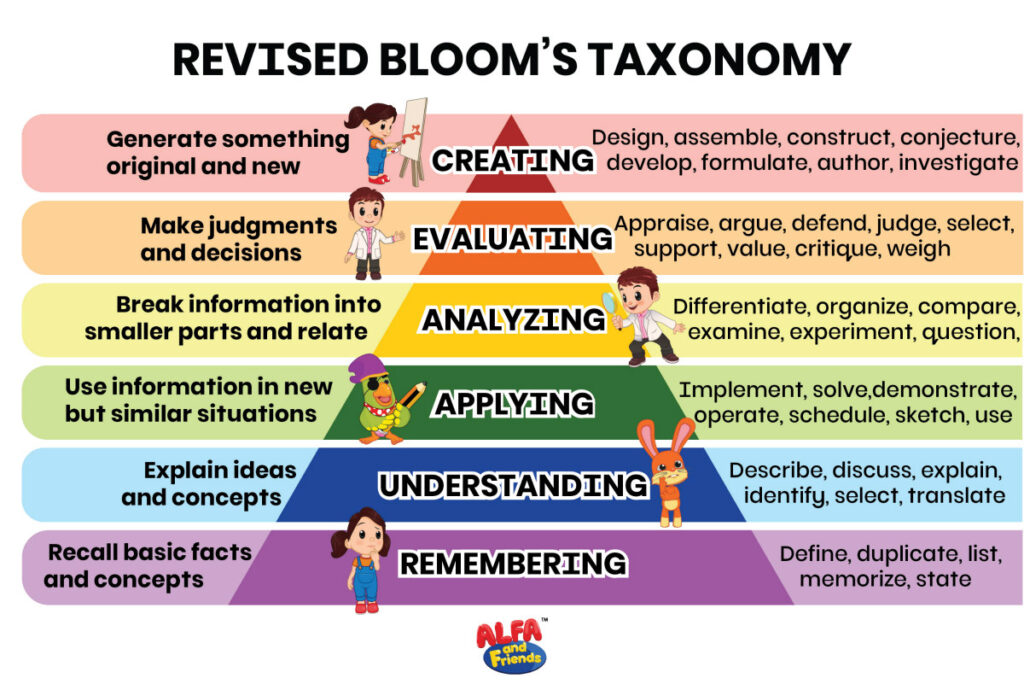
Using Bloom’s Taxonomy to Guide Interactions in the Classroom ALFA

Bloom's Taxonomy Flip Chart {Freebie}! Teaching, Learning theory
:max_bytes(150000):strip_icc()/Blooms-Graphic-1024x757-00772b45d3974746afa6aa8a34db64e6.jpg)
Using Bloom's Taxonomy for Effective Learning
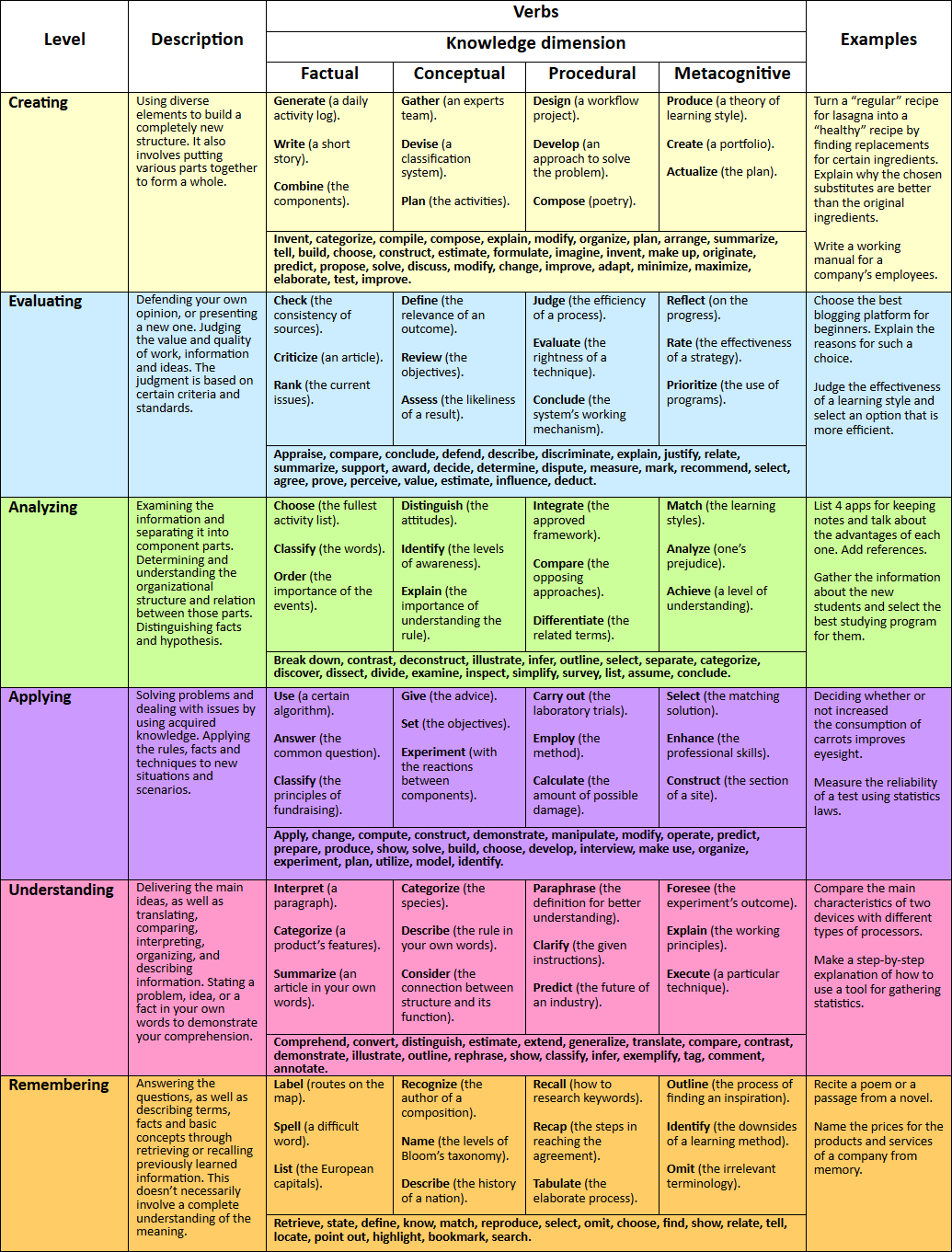
Bloom's Taxonomy—How to Make Your Studying Perfect?

Bloom's Taxonomy Education Table
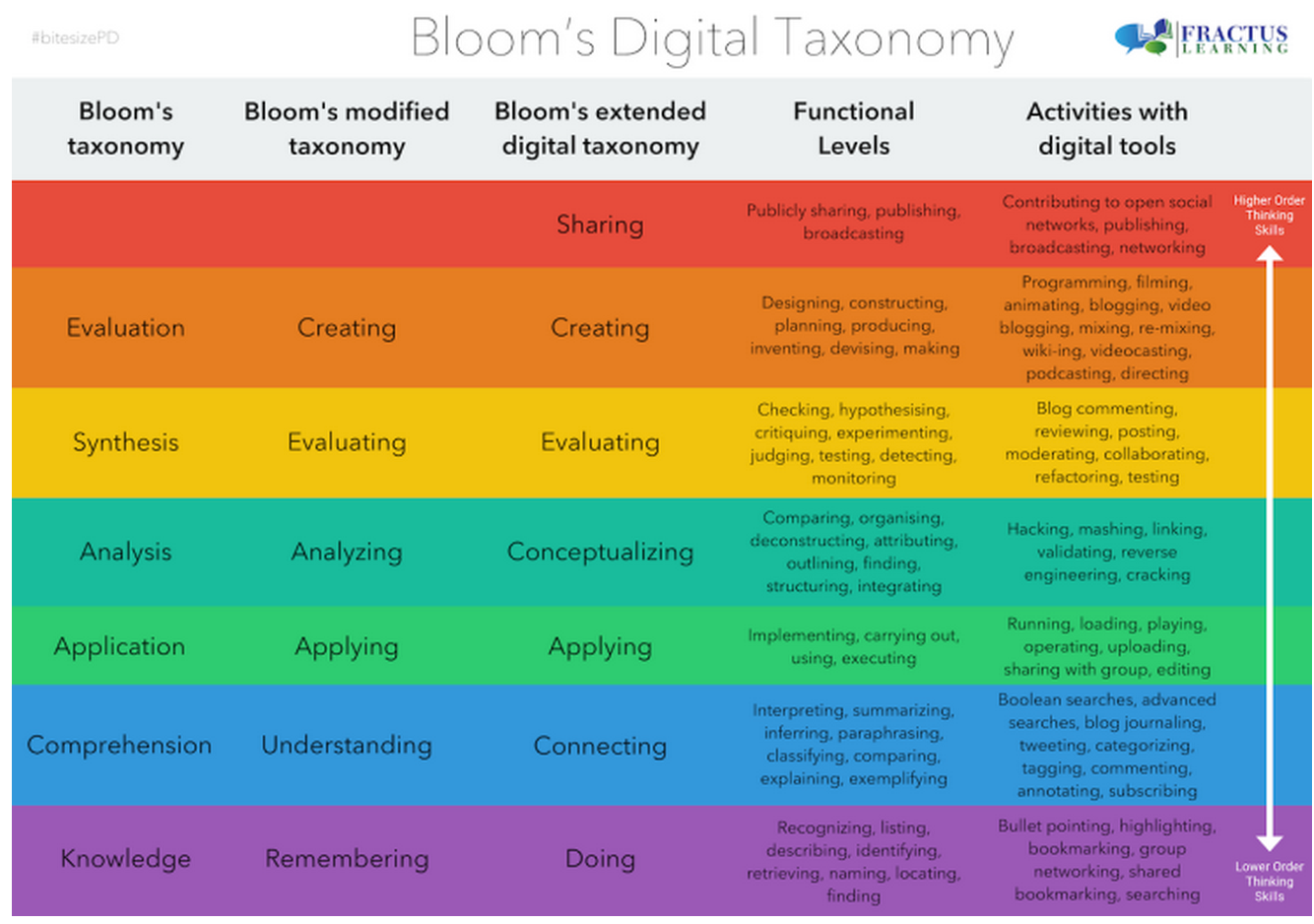
New Bloom's Taxonomy Poster for Teachers Educators Technology
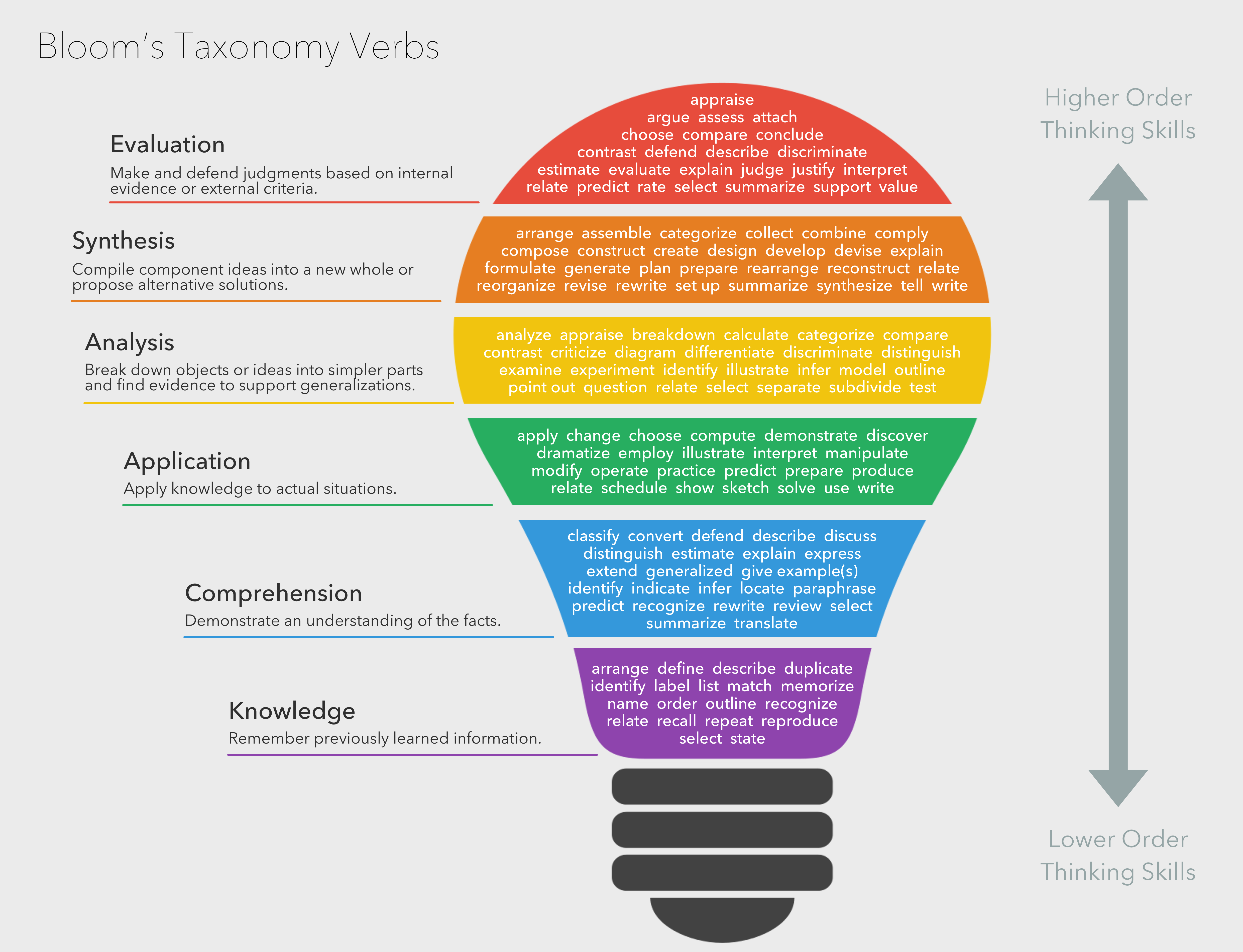
Bloom's Taxonomy Verbs Free Chart and Handout Fractus Learning
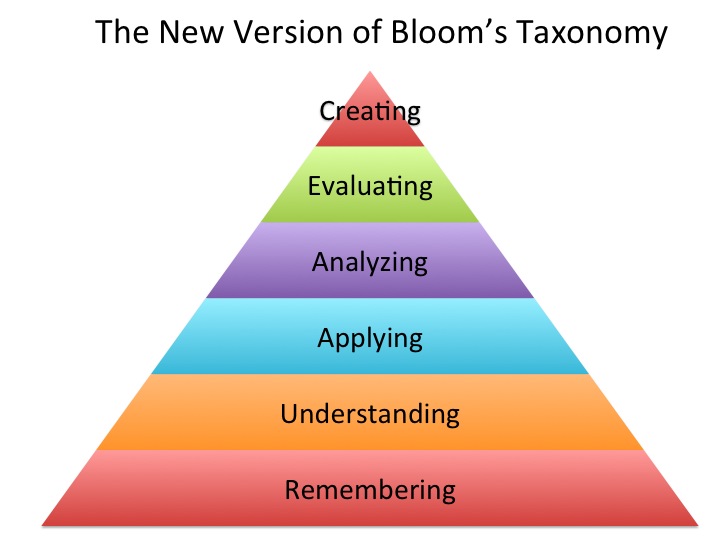
A Guide to Bloom’s Taxonomy The Innovative Instructor
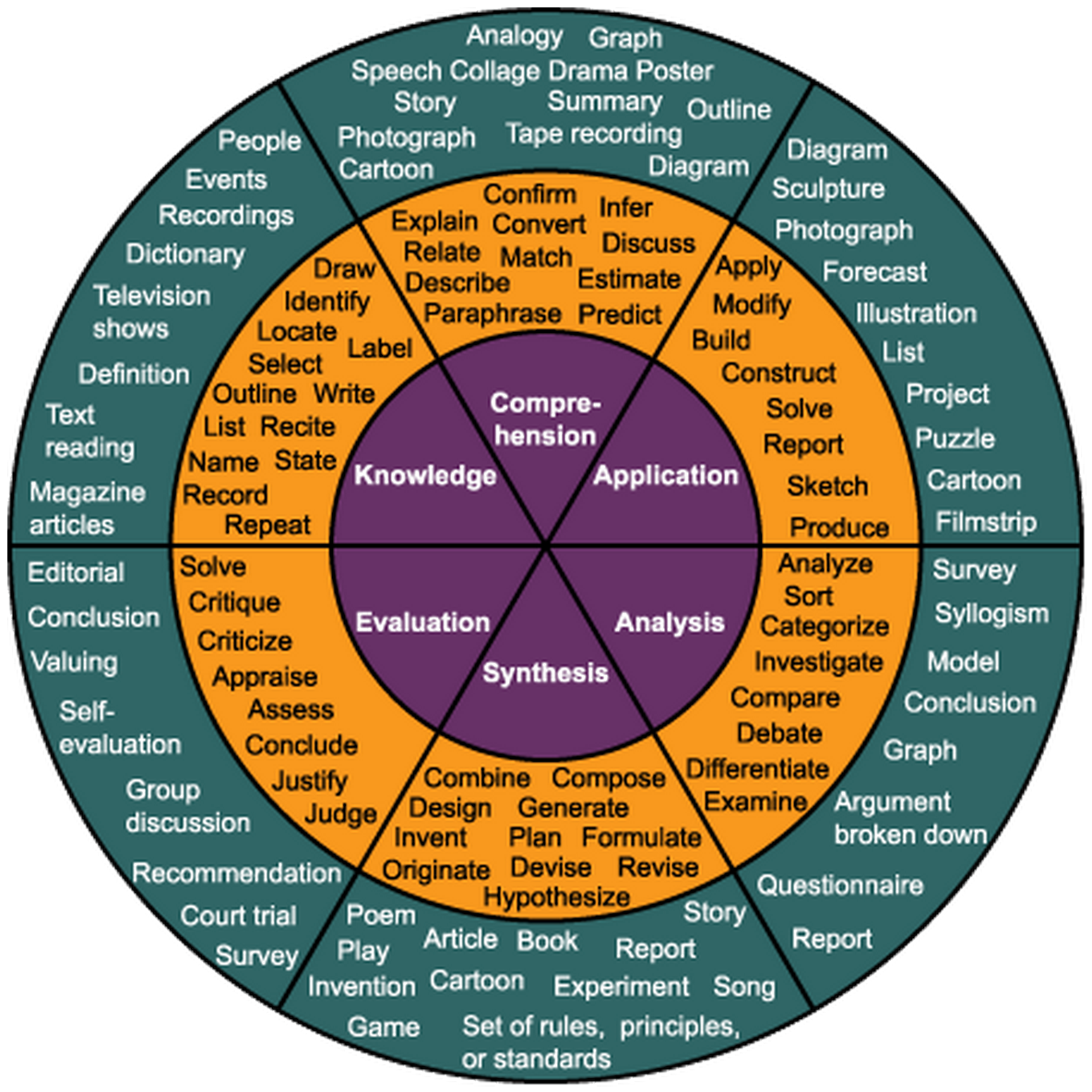
8 Wonderful Blooms Taxonomy Posters for Teachers Educational
Objectives State What We Want Our Students To Learn And Be Able To Do.
To change or create into some‐. Web in 1956, benjamin bloom with collaborators max englehart, edward furst, walter hill, and david krathwohl published a framework for categorizing educational goals: Bloom found that over 95 % of the test questions students encounter require them to think only at the lowest possible level.the recall of information. Web revised bloom’s taxonomy action verbs.
The Theory Is Based Upon The Idea That There Are Levels Of Observable Actions That Indicate Something Is Happening In The Brain (Cognitive Activity.) By Creating Learning Objectives Using.
A taxonomy for learning, teaching, and assessing. The theory is based upon the idea that there are levels of observable actions that indicate something is happening in the brain (cognitive activity.) by creating learning objectives. Here, bloom’s taxonomy is situated in the four types of knowledge, factual knowledge of terminology and details, conceptual knowledge of relationships among pieces of concepts or theories, procedural knowledge of processes and methods of theories and problems, and metacognitive knowledge of learning strategies and processes. Demonstrate facts and ideas by organizing, comparing, translating,
A Statement Of An Objective Contains A Noun (Type Of Knowledge) And A Verb (Type Of Cognitive Process Using The Knowledge).
Revised bloom’s taxonomy model (responsive version) revised bloom’s taxonomy model (flash version) download the revised bloom’s taxonomy (pdf) recommended revised. Web benjamin bloom created a taxonomy of measurable verbs to help us describe and classify observable knowledge, skills, attitudes, behaviors and abilities. Students will be able to verb noun phrase. Benjamin bloom and colleagues (1956) created the original taxonomy of the cognitive domain for categorizing level of abstraction of questions that.
In 1956, Benjamin Bloom Headed A Group Of Educational Psychologists Who Developed A Classification Of Levels Of Intellectual Behavior Important In Learning.
General form of a learning objective: Creating bloom’s definition understanding of exhibit memory of previously learned material by recalling facts, terms, basic concepts, and answers. And breaking information into parts by thing new. Demonstrating basic understanding of facts and ideas.